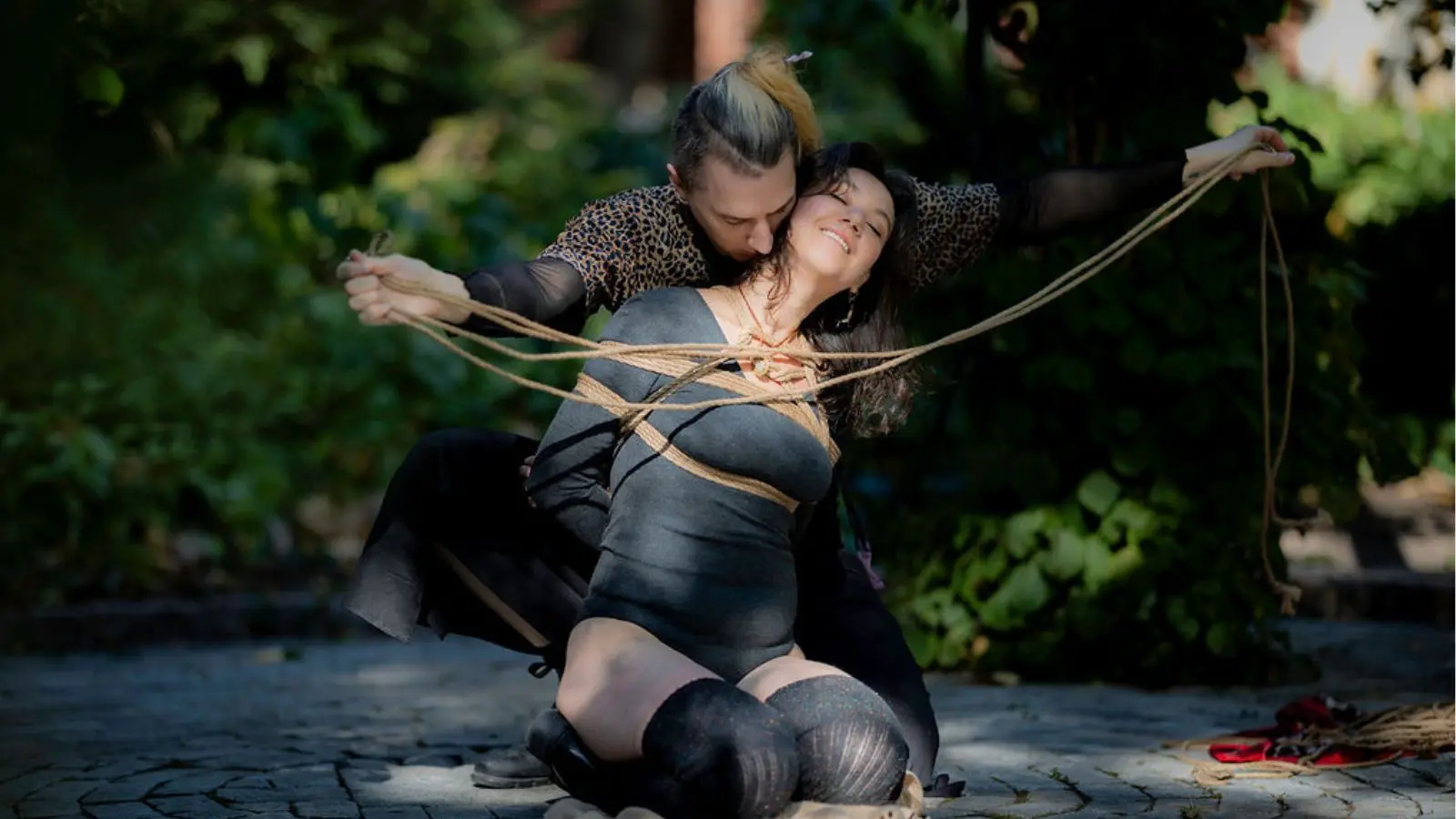
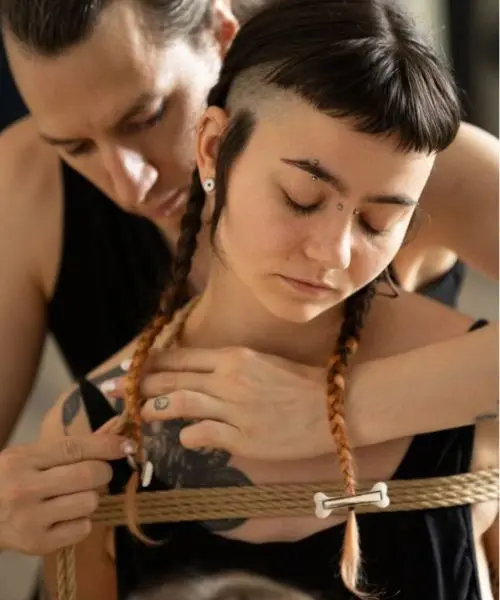
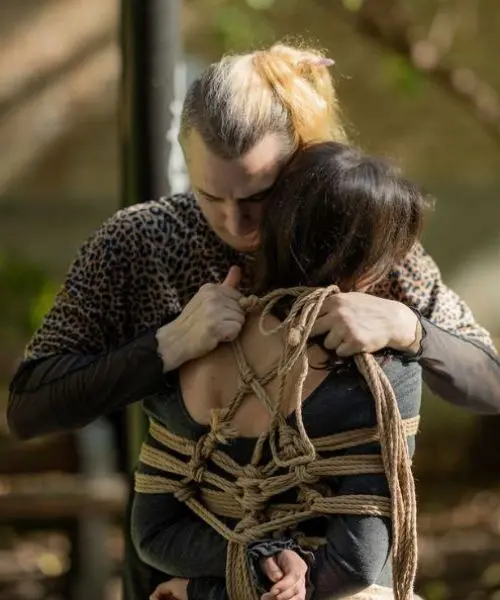
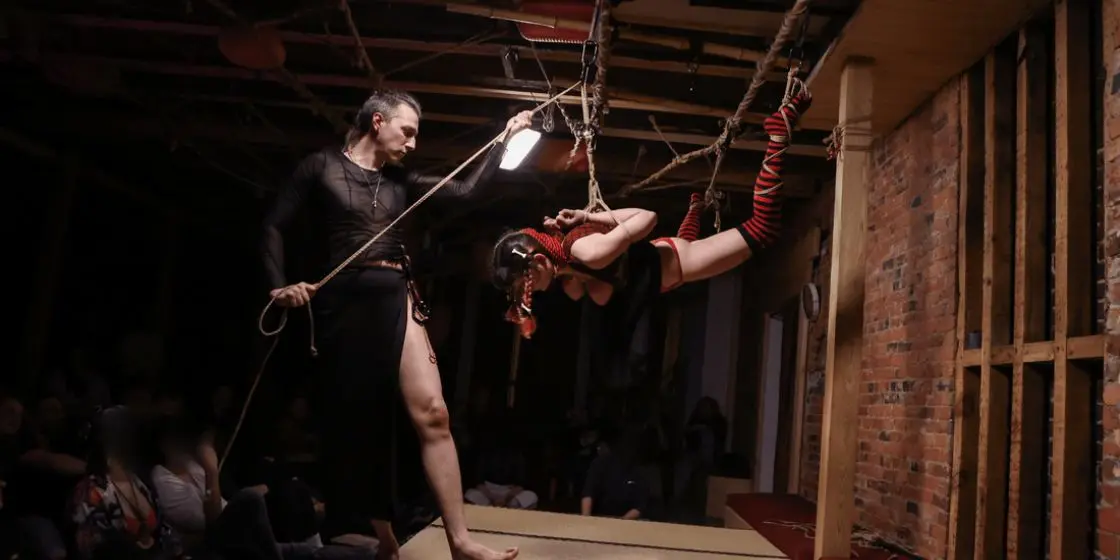
These shapes are not ideas to just contemplate but integrate; and that takes practice. Structure tells you what the form requires. Tension tells you what the moment demands. Flow tells you how to adapt when reality differs from the plan.
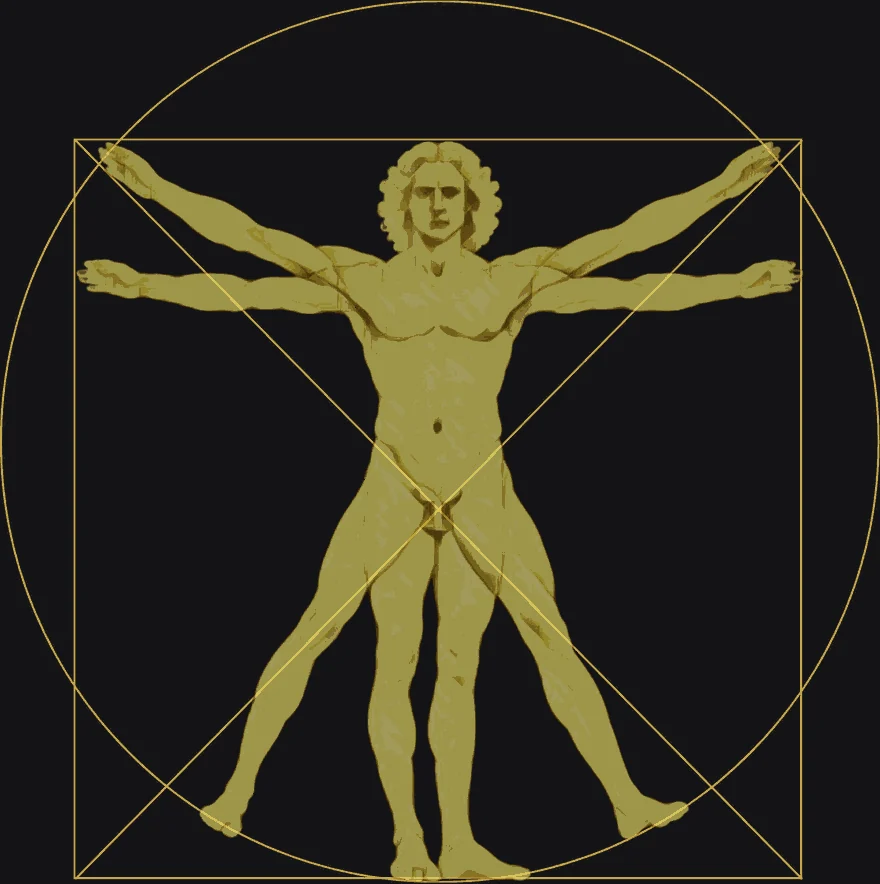
These are not sequential stages. They are simultaneous concepts found everywhere; Like proportion studies of the Vitruvian Man. At any moment in practice, all three are active, at all times. These shapes are also teaching tools and apply to biomechanical rules. The question is: do any of these need your immediate active attention? Eventually they are all passively applied; we do not think when we walk; we just do, but reality is that many people could go back to learning how to walk.
"In time, the rope will tie you as much as you tie it; Mastery is not the goal. Walking the path is."
The square carries information and patterns that we can study; Click on the Vitruvian man to reveal avenues of study.
NERVE · Fundamentals · Physical safety
01BRACHIAL PLEXUS · THE ARMPIT
Where all three of them leave the body.
All the nerves come out of the armpit and run along the outside of the arm at different intervals. That is why a wrap sitting wrong causes tingling in the fingers rather than at the wrap. It is also why armpits sit on my never list alongside elbows and the inside of the arms. Everything else on this figure passes through here first.
WATCH FORRope in or across the armpit at all. My rule here is blunt: arm pits, never.
PRACTICE · Fundamentals · Torsions & joint erosion
02SHOULDERS · BODY MANIPULATION
The shoulder articulation, and how the arm gets there.
The takatekote is known for causing torsion injury, which is why I teach manipulating a partner into position rather than pulling them there. The precaution I credit to Fuoco, out of circus: hold the arm out at a 45 degree angle, rotate until the thumb points backwards, then pivot the more flexible arm into position. You should see the shoulder pitch forward, and that is how you know you have it.
WATCH FORDeactivating the shoulder by pulling it down. It is very dominant and cannot be resisted, which is part of its charm, and it comes with a slow decline in shoulder integrity.
NERVE · Fundamentals · Physical safety
03RADIAL NERVE
First out of the armpit, protected by the deltoid.
Compressed, it tingles on the top of the hand and into the thumb area, and it is the one that carries mobility. My placement is that the top wrap sits at the bottom of the deltoid where the muscle still protects the nerve, not in the valley between deltoid, biceps and triceps. For suspension in this arm position I do not take that first wrap beyond about 80 per cent.
WATCH FORThe hand will not close all the way. I address that fast. A student who ignored it was being straw-fed a drink two weeks later, wrists limp, and still has grip weakness.
NERVE · Fundamentals · Physical safety
04MEDIAN NERVE
Follows the inside of the arm, can be caught in the bend of the elbow.
It reports on the palm side of the hand: the tips of thumb, index and middle finger, and sometimes only half the ring finger depending on the person, above the knuckles of the digits.
WATCH FORTingling in that palm-side pattern. It has also been known to cause weakness in the side to side movement of the thumb.
NERVE · Fundamentals · Physical safety
05ULNAR NERVE
Last out of the armpit, around to the outside of the arm near the elbow.
Most often affected by the Kannuki, or by any wrap causing problems on the inside of the arm, or the lower wraps near the elbow, depending on placement. My second wrap sits roughly halfway from shoulder to elbow and stays looser than the top one, around 60 per cent.
WATCH FORLocalized tingling in the pinky, front to back, and the other half of the ring and middle finger.
PRACTICE · Fundamentals · Physical safety
06NO ROPES IN JOINTS
Elbows, knees, wrists, ankles, armpits, groin.
My reasoning is that when you are new you are not in control of the tension you are placing there. Elbows and the inside of the arms, never. Armpits, never. On wrists I place the rope on the other side of the articulation, where pressing tells you it is weak. If a cuff does slip into the articulation a fist buys time, but only enough time for the rigger to redress it.
WATCH FORYou should not be feeling localized tingling. If you are placing or feeling a lot of pressure near a joint, that is likely the cause.
PRACTICE · Fundamentals · Physical safety
07CIRCULATION · VENOUS OR ARTERIAL
Colour tells you which problem you have.
Blue is venous: blood entering and not leaving. The nerves are not in much danger of losing oxygen barring actual compression, but stagnant blood carries an embolism risk. White is arterial: blood leaving and not entering. Generalized tingling can come with either, since the body is reading an oxygen imbalance, though I only get it during arterial. The trap is that generalized tingling masks localized tingling, so a circulation problem can hide a nerve problem underneath it. Raynaud’s sits on top of all of it: it affects around 20 per cent of the population, and with it, or with peripheral vascular disease, I drastically reduce time in bondage. On that body, colour stops being a reading you can trust.
WATCH FORMy order: generalized tingling is accepted yet questionably okay. Discolouration is potentially bad and masks localized tingling. Localized tingling or loss of movement is very bad.
PRACTICE · Fundamentals · Neck rope
08NECK ROPE
The front and sides of the neck.
Full occlusion of both the arteries and the veins puts someone out in four seconds. It is an involuntary automatic response, not something willpower or experience reaches. Once out they are dead weight, and you have seconds. Placement on the neck is fragile and specific on top of that, and people die every year from neck-related sexual practice.
WATCH FORMy position; yes, I will potentially do neck rope, I do NOT teach to do so. It is dangerous, both partners; do your research together, understand the risk profile. Anything above the shoulders, just take a class for that section first.
PRACTICE · Fundamentals · Emotional safety
09THE MIND · EMOTIONAL SAFETY
Not a place on the body.
Arguably more important than the physical. Talk about expectations so you are both on the same page, get feedback from each other, and keep evolving the technical and the emotional awareness together rather than treating one as the real skill and the other as the soft part.
WATCH FORUsing “misunderstanding” as an excuse afterwards.
PRACTICE · Fundamentals · Physical safety
10CHEST WRAPS & RIBS
Around the chest, and the soft tissue between the ribs.
Wraps too tight around the chest have been known to cause numb patches under the breast or pectoral tissue. It happens most when someone is tied with their arms up in the air: the muscles are stretched and the shoulder blades are not where they will end up, so when the arms come down that top wrap is suddenly far too tight. Separately, a friction placed in the soft tissue between the ribs can trigger a vagal shock.
WATCH FORA wrap set while the arms are up. Numb patches below the wrap rather than at it.
NERVE · Fundamentals · Physical safety
11FEMORAL NERVE
Through the front of the hip, in the lines of a futomomo or hip harness.
The futomomo and various hip harnesses can cause sensitivity issues through the femoral nerve. Tight lines high up across the thighs are on my avoid list. Thigh cuffs above the knee over extended periods raise the same problem, and there the numb patch has been known to show up on the top of the foot rather than where the rope is.
WATCH FORA hip harness in a backbend is a different one again: sciatic compression, showing up as weakness opening the legs.
NERVE · Fundamentals · Physical safety
12GROIN · INSIDE THE LEGS
Inside the legs.
Known to cause sensitivity issues on the top of the foot. Some people really enjoy rope here and it is a risk some are willing to take. Suspension trauma, orthostatic shock while suspended, is the other thing that lives in this region if someone is held vertically too long.
WATCH FORNumbness on the top of the foot from a rope nowhere near the foot.
NERVE · Fundamentals · Physical safety
13BEHIND THE KNEE · FOOT DROP
The popliteal fossa, and the front of the knee.
Calf binders too tight, for too long, or too high into the popliteal fossa cause foot drop. So does rope behind or around the front of the knees when it sits too high or too tight. This is the leg’s version of the radial problem: the injury is named for the lost function, not for the sensation.
WATCH FORFoot drop. Check it the way you check hands, by asking for the movement rather than asking how it feels.
PRACTICE · Fundamentals · Sensation, Mobility
14CHECK YOUR HANDS
Two separate checks, because they fail separately.
Sensation: touch the ends of the fingers with the thumbnail individually, and touch the backs of the hands against something, often the back in a box tie position. Mobility: the Duck and the Bear. Closing the fingers all the way meets real resistance, and when the radial is affected the hand will not close. Onset can be surprisingly sudden, so check frequently and after every transition.
WATCH FORHands that have not moved in minutes. This is one of the few things I will interrupt a scene for. If you have forgotten how long it has been, that is the answer.
PRACTICE · Fundamentals · Physical safety
15REDRESSING
What to do the moment tingling shows up.
Slide one or two fingers behind the wraps to equalize the tension, or move the problem somewhere else. Sometimes one rope width up or down is the whole fix. If the tingling subsides, sometimes in three or four seconds, the fun continues. The play does not need to stop, it needs to pause and be redressed.
WATCH FORIf it does not resolve, the ropes come off quickly. Tingling from nerve compression is close to unavoidable; length of compression is the thing you are actually controlling.
PRACTICE · Fundamentals · Physical safety
16CUMULATIVE, AND DO NOT MASSAGE
Two things people get wrong after the fact.
The damage is cumulative whether or not it was permanent. Someone who has had severe extended compression and recovered will show symptoms faster the next time, so their threshold is not the one in the book. And where the insulation or the axon is damaged, or the nerve is sheared, do not massage the area: it makes matters worse.
WATCH FORTreating a full recovery as a clean slate. Rubbing the arm to help.
PRACTICE · Fundamentals · Loss of consciousness
17LOSS OF CONSCIOUSNESS
Pressure drop, and vagal shock.
Nausea or near-fainting while tying is often a pressure drop, and in my experience it tracks with people not moving their feet for long stretches. A friction in the soft tissue between the ribs can trigger a vagal shock that feels much the same. Either way: cold or hot, dizziness, nausea, ringing ears, blurred vision, sweating.
WATCH FORSit them down, untie gently but quickly, or cut, depending on urgency and how panicked they are. Panic makes it worse, so be gentle. Then tell them they did not do anything wrong.
PRACTICE · Fundamentals · Leaving someone unattended
18NEVER UNATTENDED
Everything on this figure can happen while you are out of the room.
Someone in a box tie who falls has no hands to catch themselves, and people still try, bending toward the floor so the face arrives faster. Their safety relies entirely on your presence, and the safety tool only counts if you are there to use it.
WATCH FORJust don’t do it.